Element Libraries
ArchFlow supports a diverse set of element libraries, allowing you to build everything from standard flowcharts to detailed multi-cloud deployment topologies. Elements are grouped into 12 core categories.
1. Cloud Architecture Libraries
ArchFlow features high-quality vector representations of official cloud service icons:
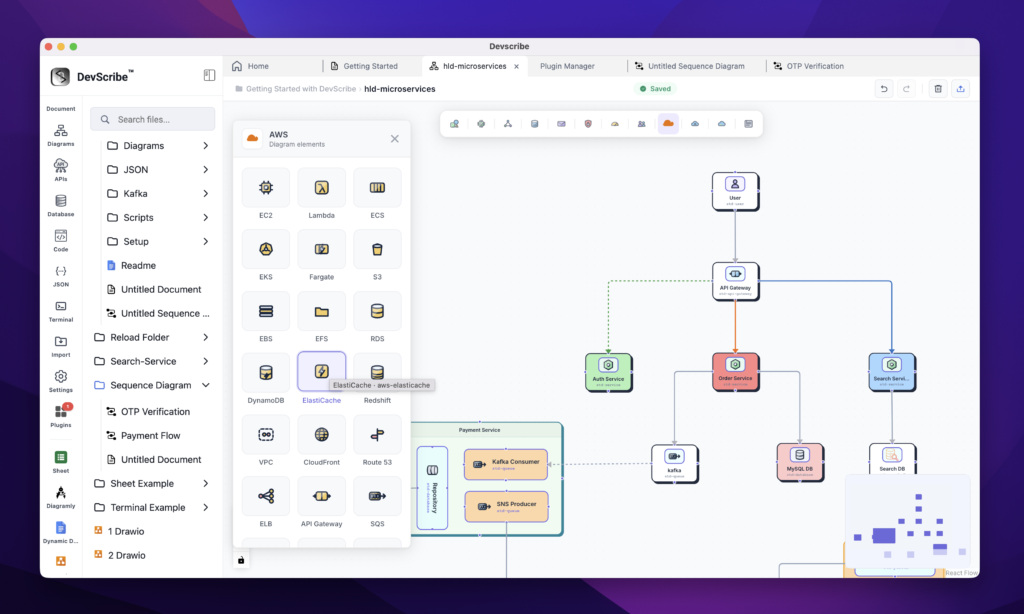
🅰️ AWS (Amazon Web Services)
- Purpose: Design infrastructure topologies on AWS.
- Key Elements:
EC2(Elastic Compute Cloud)Lambda(Serverless Compute)S3(Simple Storage Service)RDS(Relational Database Service)DynamoDB(NoSQL Database)API Gateway,ELB(Load Balancers),SNS/SQS(Messaging).
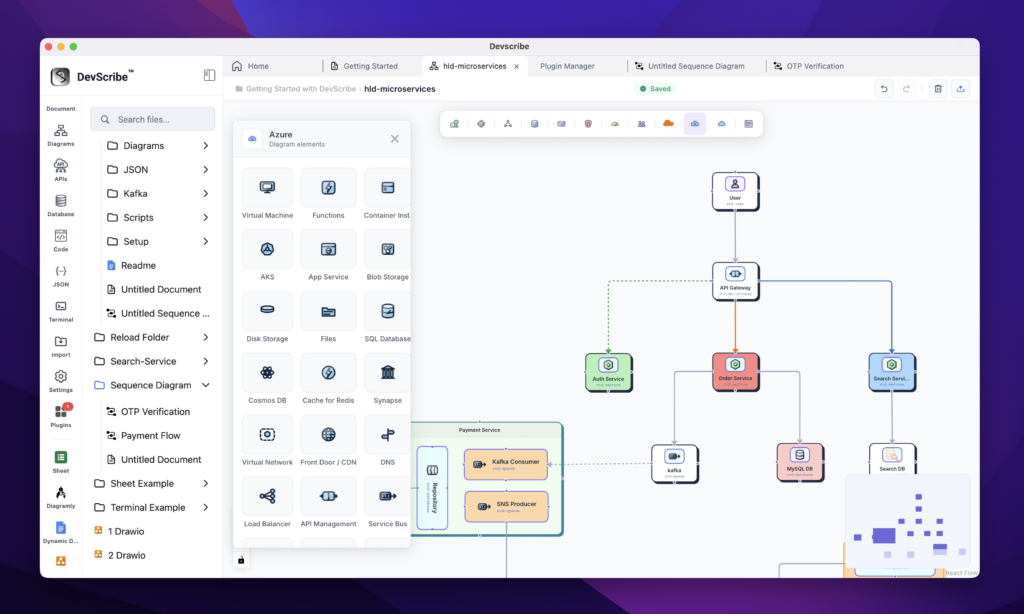
🟦 Azure (Microsoft Azure)
- Purpose: Model enterprise architectures hosted in Azure.
- Key Elements:
VM(Virtual Machines),App Service,Functions.Aks(Azure Kubernetes Service),Container Instance.Blob Storage,Disk Storage,Cosmos DB,SQL Database.VNet,Load Balancer,Front Door,API Management.Service Bus,Event Grid,Event Hubs.Entra ID(Active Directory),Monitor.
🟨 Google Cloud (GCP)
- Purpose: Document architectures using Google Cloud infrastructure.
- Key Elements:
Compute Engine,App Engine,Cloud Run,GKE(Kubernetes Engine).Cloud Storage,Cloud SQL,Firestore,Spanner.VPC Network,Load Balancing,Cloud DNS.Pub/Sub,Cloud Tasks.Cloud IAM,Cloud KMS,Cloud Operations(Monitoring/Logging).
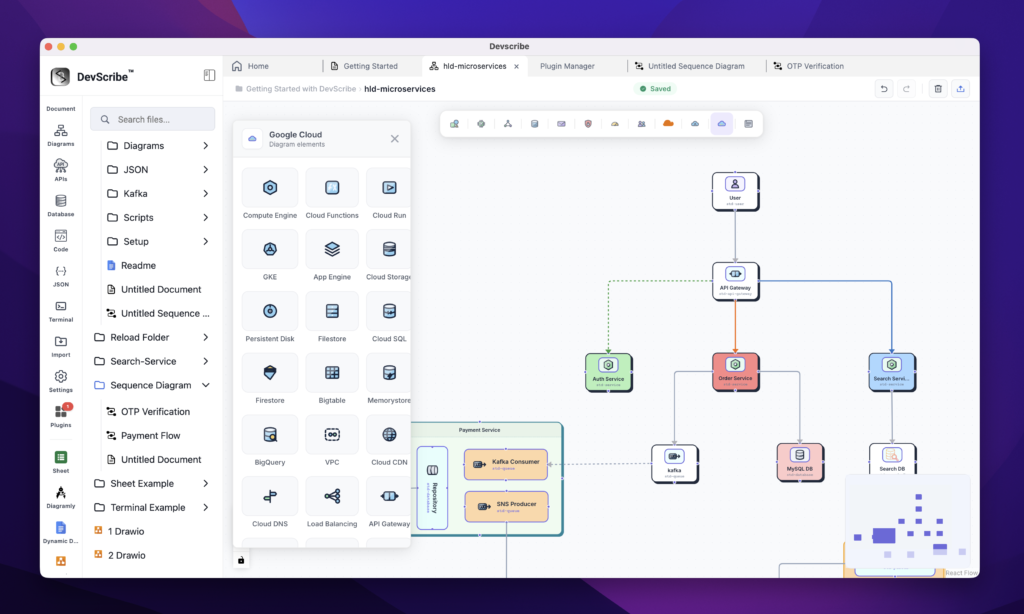
2. Infrastructure & System Design
For cloud-agnostic, general infrastructure planning:
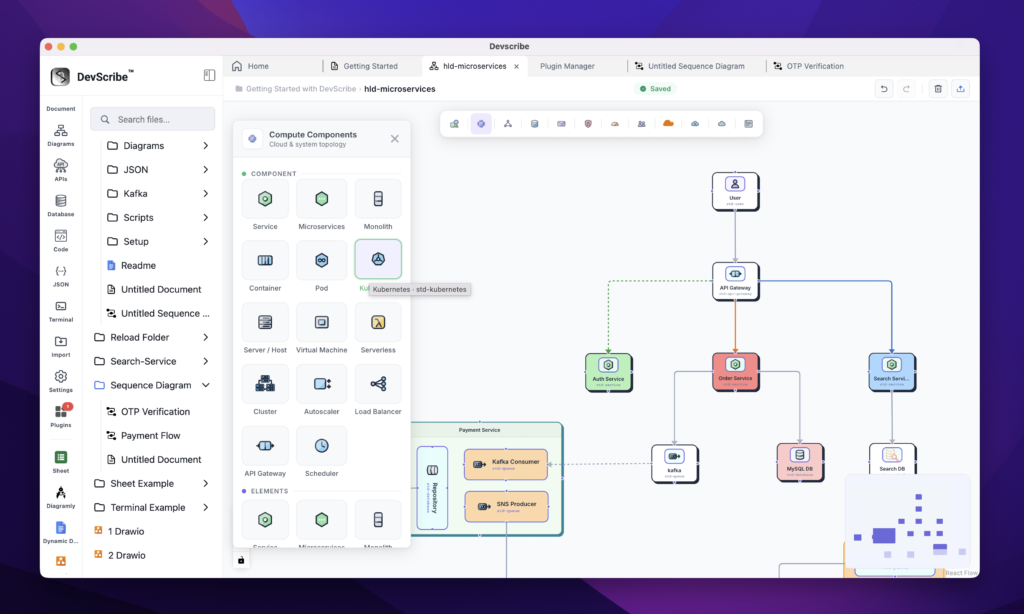
⚙️ Compute Components / System Design
- Purpose: High-level system engineering blocks.
- Key Elements: Monolith applications, Microservices, Containers, Pods, Kubernetes clusters, Serverless blocks, Bare-metal servers, and Cron/Scheduler tasks.
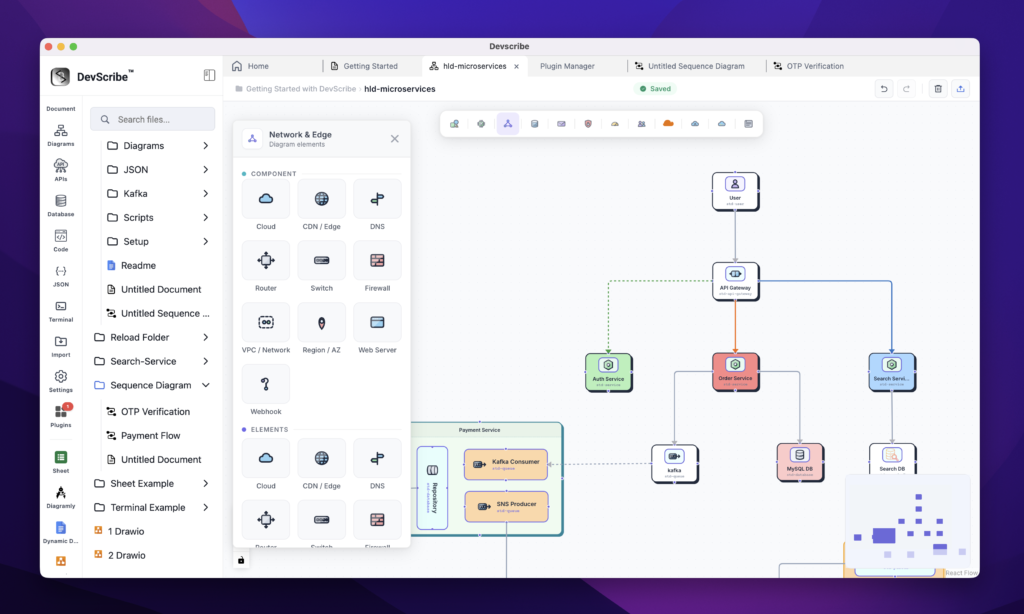
🌐 Network & Edge
- Purpose: Network flow, routing, and traffic distribution.
- Key Elements: firewalls, general load balancers, DNS servers, routers, API gateways, CDN edges, and NAT gateways.
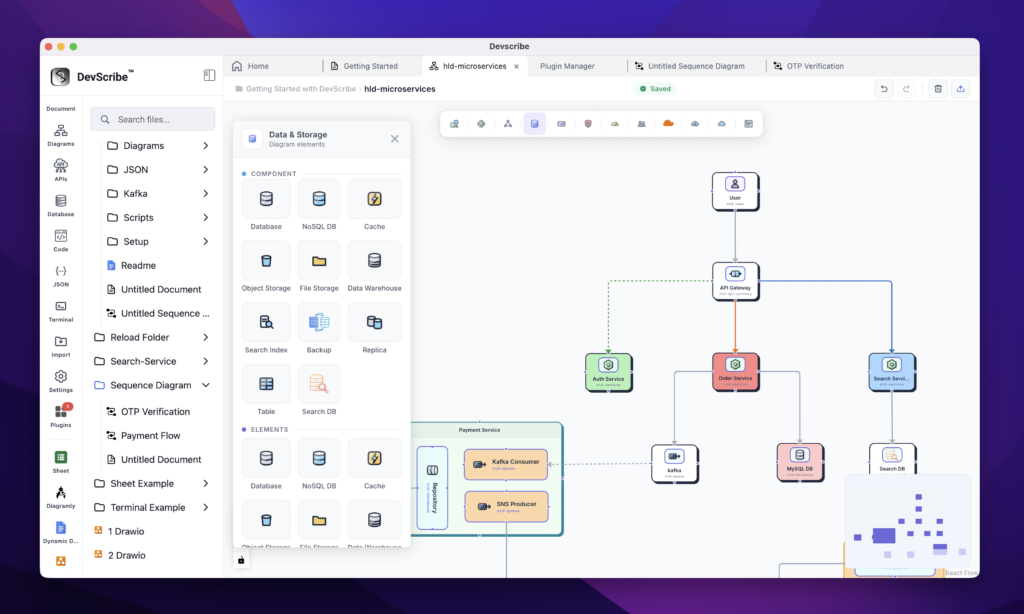
🗄️ Data & Storage
- Purpose: Storage topologies and caching layouts.
- Key Elements: SQL databases, NoSQL engines, Cache/Redis nodes, Object Storage, Block drives, and search indexing nodes (e.g. Search).
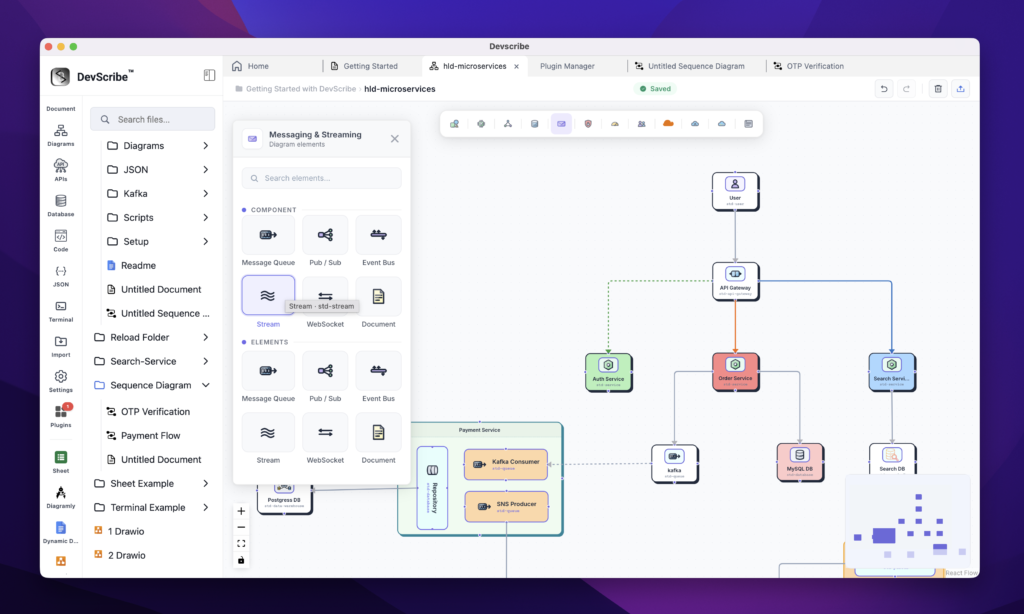
✉️ Messaging & Streaming
- Purpose: Event-driven designs and pub/sub pipelines.
- Key Elements: Message Queues, Event Buses, WebSocket channels, and streaming data processors.
3. Operations, Security, & Users
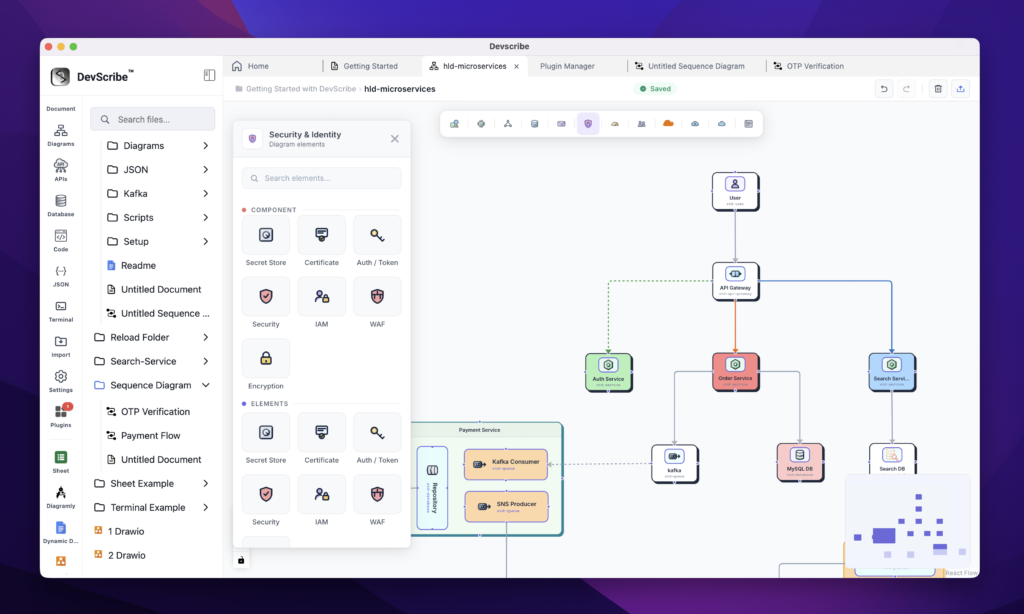
🛡️ Security & Identity
- Purpose: Threat modeling and authentication diagrams.
- Key Elements: Identity Providers (IdP), Key Vaults / secret managers, WAFs, Certificate authorities, and IAM policies.
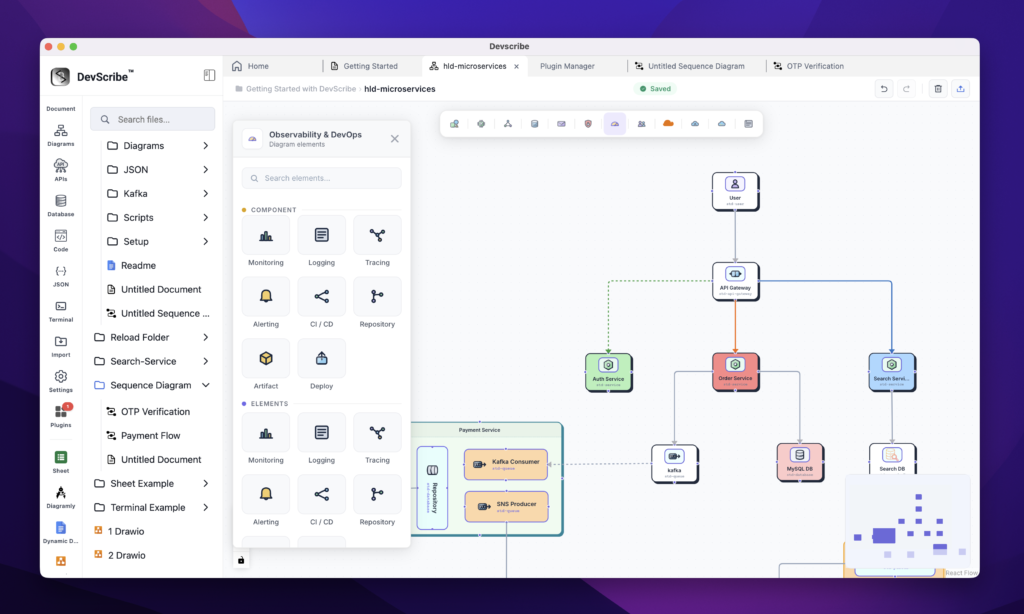
📊 Observability & DevOps
- Purpose: CI/CD pipelines and monitoring setups.
- Key Elements: Logging aggregators, APMs / Monitors, Alert managers, CI/CD runners, and analytics dashboards.
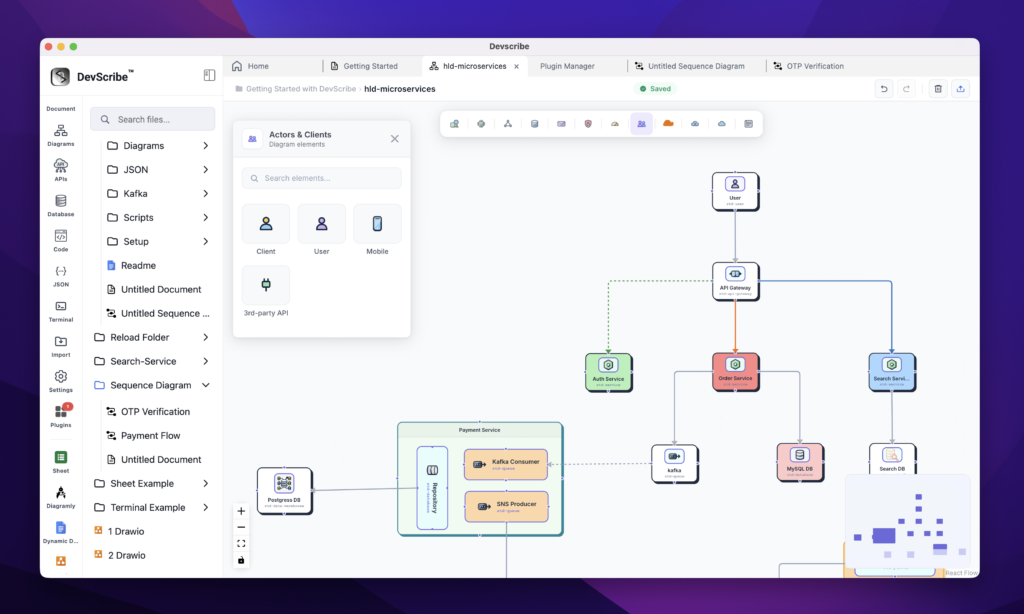
👥 Actors & Clients
- Purpose: Represent users, devices, and interfaces.
- Key Elements: Web browsers, Mobile apps, End Users (actors), IoT devices, and external API clients.
4. Standard Shapes & Annotations
🟢 Standard Shapes
- Purpose: Classic flowcharting and block diagramming.
- Key Elements: Rectangles, Circles/Ovals, Cylinders (Data storage), Stacks, Queues, Parallelograms (I/O), Clocks, Webpages, and Code/SDK modules.
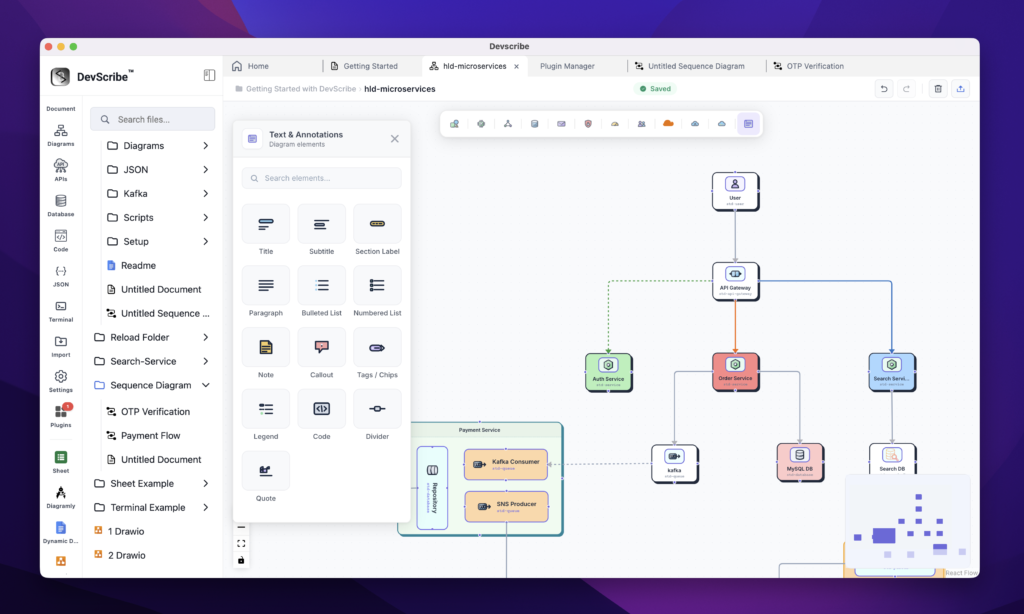
📝 Text & Annotations
- Purpose: Adding headers, descriptive paragraphs, and visual boundaries.
- Key Elements: Rich text blocks, floating annotations, callouts, and horizontal/vertical dividers.